Download Brochure |
-
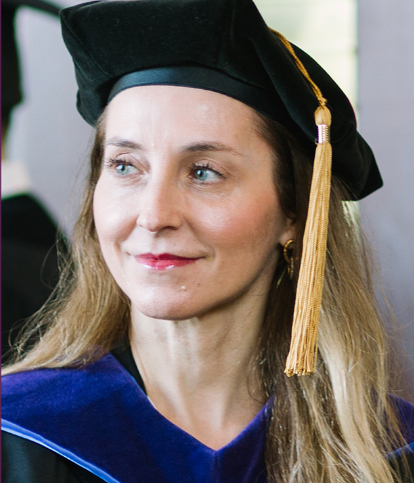
"I am excited and encouraged by the Integral Psychology Program at JFKU; this marks another promising advance of the developing awareness of our times by an impressive team of ground breaking scholar-practitioners."
Where Might it Lead
Learning Environment
Processes of Self Development
Program of Study
Degree Requirements
Academic Options
What Students Learn
Students will come away from the program with the:
• Capacity to take an Integral Perspective that recognizes the insights provided by premodern, modern, and postmodern perspectives on the major disciplines of knowledge and gain access to subjective, intersubjective, and (inter)objective aspects of reality.
• Skills to understand different perspectives and interpersonally communicate with individuals holding divergent worldviews.
• Ability to discuss and explain different psycho-spiritual practices of meditation, and self-inquiry to ongoingly become aware of their own body/mind connection, interior states, psychological structures, emotional reactions, shadow material, and object-relations.
• Knowledge of integral principles so as to demonstrate the following values in their personal and professional lives: commitment to ongoing personal inquiry; commitment to skillful action; commitment to ethical relationships; commitment to creating sustainable systems while respecting different perspectives. (Return to top) Where Might it Lead
With an Integral Approach, it becomes apparent that psychology is of profound relevance for many disciplines and careers. The Integral Psychology Program (IPP) at JFKU prepares students for engaging with the nuanced dynamics of psychology in the future career paths of coaching, organizational development, consulting, sustainability, community development, education, and more. To support these career paths, the MA in IPP can be augmented with other certificates in specific disciplines, such as life coaching and integral theory, with some units added to the IPP core courses (See Academic Options and Program of Study). (Return to top) Learning Environment
The Integral Approach underpins the pedagogy used in the Integral Psychology Program. Courses taught by leading scholar-practitioners provide a learning environment that encourages self-reflection, experiential practice, and rigorous inquiry. The courses are combined for comprehensive learning of psychology as it manifests in all quadrants of reality (see diagram of Sample Courses). While specific courses might be associated with a particular quadrant, all of the courses are contextualized by the four quadrants. For example, even though neuropsychology as a field is primarily focused on individual physiology and behavior (UR), it is taught in the Integral Psychology program in such a way that explores the experiential correlates to neurons (UL), intersubjective influence on neuronal development (LL), and evolutionary perspectives on neural networks (LR). In other words, the course does not just focus on the Upper Right aspects of neuropsychology but explores neuropsychology from all four quadrants. Similarly, curriculum is designed to reflect and honor student’s multiple ways of knowing. These ways of knowing correspond with how each person uniquely navigates his or her world, and are thus important to include and acknowledge in the classroom (see diagram on Ways of Knowing). (Return to top) Process of Self-Development
A central aspect to studies in Integral Psychology is one’s own self-development process. Integral Life Practice: Students are strongly encouraged to engage in a spiritual practice (or practices) and to explore their own psychospiritual development as an essential part of their study of integral psychology. Students will develop and demonstrate a functioning personal integral life practice that exercises multiple dimensions of themselves. In the classroom and over the course of the program, students are provided guidance and methodologies for engaging in interior self-development practices. Two such methodologies include The Integral Mirror and Ten Awareness Practices (both are shared below). These tools are useful not only for the individual student but are shared (if appropriate) with other students, creating a supportive community of self-inquiry. Bringing Theory Alive: Experiential learning of these interior practices gives students an opportunity to embody a central tenet of Integral Theory, namely: that all forms of knowing and inquiry offer important perspectives of reality. Students experientially learn and use these interior practices not just for their own exploration of self and consciousness, but also for how to apply these methods academically in more formal research and practically in their careers. In the words of Ken Wilber:
- The test of any integral psychology is to what degree it can accept and coherently integrate the valid research and data from the various schools of psychology…of course, this is a daunting challenge… but as of today we know too much to ever settle for less.
The 68 quarter-unit Master of Arts program consists of core courses, sacred psychology, and professional development with a strong focus on effective communication, writing, and research skills. Sacred Psychology: Courses in sacred psychology encompass philosophical and spiritual principles, as well as experiential meditative practices. Professional Development: The professional development component of the program provides courses such as Teaching Practicum, Conflict Resolution, and Principles of Organizational Consulting. Additionally, a supervised Externship offers students the opportunity to translate the principles of Integral Psychology into their chosen profession or vocation and to gain practical skills and work experience. Thesis or Final Project: Students have the option to either complete a thesis or a Final Integrative Project; the latter consists of a written paper and a presentation that integrates personal experience, academic content, and professional goals. Samples of Final MA Integrative Projects by graduate students in the Integral Psychology Program:
- Coaching with the Enneagram: An Integral Perspective of Transformation, by Jennifer Felker
- A Praxis of Everything: Playing with AQAL Post-Metaphysics, by Jordan Luftig
- MBYT: Myers Briggs Yoga Types, by Sarah Ewing Robinette
- Black American Racial Identity: A Map to a World-centric Perspective, by Duane Thomas
- TSK Inquiry in AQAL Space: Applications of the Time, Space, Knowledge Vision in Integral Education, by Robert Alderman
- Life Practice for Women Moving Toward Wholeness, by Shana Weinstein
- The Spiral of Peace: Reconciling Disparate Views, by Molly Matchett
| M.A. in Integral Psychology Degree Requirements | ||
| Undergraduate Prerequisites | 0 - 10 | |
| PHR 3405 | World Religions | 3 |
| PYC 3150 | Personality and Psychotherapy | 4 |
| COR 3150 | Research Writing and Information Resources | 3 |
| Core Curriculum | 46 | |
| IPP 5000 | Introduction to Integral Psychology | 0 |
| CNS 5010 | Paradigms of Consciousness | 3 |
| ISD 5010 | Integral Psychology A | 3 |
| ISD 5011 | Integral Psychology B | 3 |
| IPP 5010 | Human Development | 3 |
| IPP 5015 | Social & Cultural Psychology | 3 |
| IPP 5020 | Cognitive Theory | 2 |
| IPP 5025 | Somatic Psychology | 2 |
| IPP 5030T | Planetary Psychology | 3 |
| IPP 5031 | Evolutionary Psychology | 3 |
| IPP 5032 | Neuro-Psychology | 3 |
| IPP 5054 | Seminar in Assessment: Enneagram | 3 |
| ISD 5012 | Psychology of Dreams | 2 |
| ISD 5015T | Effective Communication A | 3 |
| ISD 5016T | Effective Communication B | 3 |
| IPP 5051 | Integral Research A | 2 |
| IPP 5052 | Integral Research B | 2 |
| ISD 5455 | Preparation for Externship | 2 |
| ISD 5460 | Externship | 1 |
| Sacred Psychology | 8 Units | |
| ISD 5310 | Integral Yoga | 2 |
| And 6 additional units from the following: | ||
| ISD 5315 | Christian Mysticism | 2 |
| ISD 5320 | Sufism | 2 |
| ISD 5325 | Buddhist Psychology | 2 |
| ISD 5309 | Taoism | 2 |
| ISD 5335 | Diamond Approach | 2 |
| ISD 5314 | Shakti-Kundalini Yoga | 2 |
| ISD 5316 | Jewish Mysticism | 2 |
| ISD 5326 | Tibetan Buddhism | 2 |
| ISD 5342 | Rites and Symbols of Feminine Spirituality | 2 |
| ISD 5340 | Nature Spirituality | 2 |
| Professional Development | 6 Units | |
| ISD 5410 | Teaching Practicum A | 3 |
| ISD 5411 | Teaching Practicum B | 3 |
| ISD 5415 | Curriculum Development | 2 |
| ISD 5420 | Conflict Resolution A | 3 |
| ISD 5423 | Conflict Resolution B | 3 |
| ISD 5430 | Communications/Publishing/Media | 3 |
| ISD 5435 | Coaching: Evoking Excellence | 3 |
| ISD 5440 | Principles of Organizational Consulting A | 3 |
| Principles of Organizational Consulting B | 3 | |
| ISD 5445 | Grant Writing | 2 |
| CNS 5450 | Spirit in the Workplace | 2 |
| ISD 5447 | Advanced Writing and Publishing | 2 |
| ISD 5453 | Integral Coaching | 2 |
| ISD 5505 | Starting Your Own Business | 2 |
| Electives | 4 - 6 Units | |
| 6 units with Integrative Project | ||
| 4 units with Thesis | ||
| Final Integrative Project (2 units) or Thesis (4 units) | 2 - 4 Units | |
| Total | 68 | |
Many students who pursue the MA in Integral Psychology combine this degree with certificates or specific trainings offered through JFKU. Three examples include: Coaching Certificate The Coaching certificate is a naturally synergistic addition to the MA in Integral Psychology . While the coaching certificate provides skills training and capacity building in the field of coaching itself, the MA in Integral Psychology offers a comprehensive framework in which both the coach and the coaching process can flourish. All prerequisites for the coaching certificate are taken care of by the core courses of IPP; and 26 unites of the coaching certificate can be applied to the MA in IPP. With just an additional 4 units, students can graduate with both an MA in IPP and a Life Coaching Certificate. Students start this program after their first or second year of the program. Integral Theory Certificate An exciting and unprecedented Certificate in Integral Theory is now being offered by JFKU in partnership with Integral Institute. This certificate gives students a practical and theoretical foundation in all important aspects of the Integral Model. It is offered online and is thus accessible and flexible for working students. This certificate makes up the first year of a MA in Integral Theory (pending WASC approval). Students can combine the certificate in Integral Theory with the MA in Integral Psychology in such a way that they would only need to take an additional 4-6 units on top of the required 68 units for graduation. Emphasis in Integral Planetary Action New in 2007, students can select course work for an Emphasis in Integral Planetary Action. An Integral Psychology approach is of great service to some of the planet’s most pressing issues -- issues that still remain insufficiently addressed. The Integral Approach offers practitioners the awareness and skillful means for sorting the complexity of issues, identifying where their root causes may lie, and designing responses that are better aligned for effective outcomes. This emphasis includes courses on topics such as sustainability, holistic health, ecology, community development, and international development, all from an Integral Psychology perspective. This requires no additional core courses; rather courses are combined from the three programs in the Integral Studies Department, with two brand new electives in Integral Ecology and Integral Applications to Global and Social Issues. For more information call 800.696.5358, or write proginfo@jfku.edu. (Return to top)